



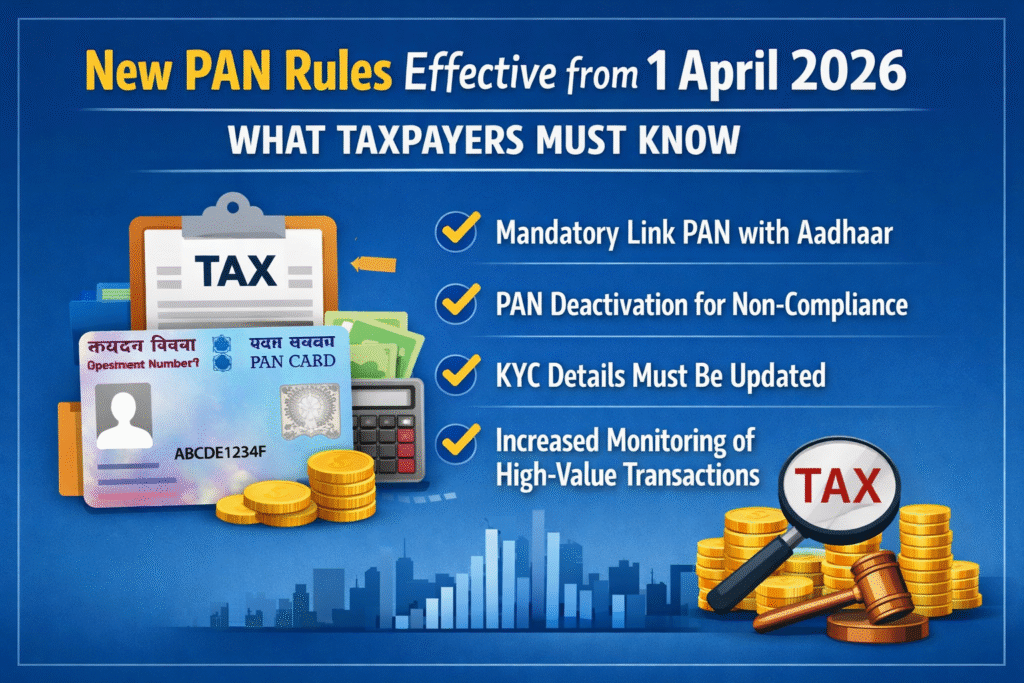
📢The Government of India has introduced significant changes in PAN (Permanent Account Number) regulations, effective from 1 April 2026, aimed at strengthening identity verification and enhancing the integrity of the tax ecosystem.
These changes will directly impact new applicants, professionals, and businesses, making it essential to understand the revised framework.
🔎 Why These Changes?
The new PAN rules are introduced with the objective to:
1. Strengthen KYC (Know Your Customer) compliance
2. Prevent fraudulent PAN issuance and duplication
3. Ensure accurate linkage between PAN and Aadhaar
4. Improve financial transparency and tax tracking
🔑Key Changes in PAN Rules
1. ❌ Aadhaar-Only PAN Application Discontinued
From 1 April 2026, the facility to apply for PAN using only Aadhaar has been withdrawn.
👉 Applicants must now submit additional identity and date of birth proof, making the process more robust.
2. 📄Mandatory Supporting Documents
PAN applications will now require multiple documents for verification. Acceptable documents include:
1. Aadhaar Card
2. Passport
3. Voter ID
4. Driving Licence
5. Birth Certificate
6. Class 10 Marksheet
3. 🆕 Introduction of New PAN Application Forms
The existing PAN forms (Form 49A / 49AA) will be replaced with new application forms.
⚠️ Old forms will not be accepted after 31 March 2026.
4. 🔤 Aadhaar-PAN Data Consistency Becomes Critical
The name and details in PAN must exactly match Aadhaar records.
❗ Any mismatch may lead to:
A. Application rejection
B. Processing delays
5. 🪪 Changes in PAN Card Format
The PAN card format is expected to evolve, aligning with digital verification systems, reducing dependency on physical cards.
6. 🔐 Stricter Verification Mechanism
The updated system will include:
A. Enhanced backend checks
B. Stronger compliance framework
c. Better monitoring of financial transactions
👥 Impact on Taxpayers
✅ Existing PAN Holders
No immediate action required
PAN remains valid